Rollune
Describe with more than sight (sound, smell, temperature), set the room with dim warm light, run quiet ambience, use props sparingly, control pacing with short sentences in tense moments and silence before reveals, and invite players to add details.
1. Describe with three senses
Sight is the default. Add two more: "The cellar smells of wet stone; somewhere, water drips; the air is cold enough to see your breath." Three details beat a paragraph.
2. Set the room
- Dim, warm lighting. Candles (LED, safely) or a lamp.
- Clear the table of anything that isn't the game.
- Put phones to work, not away: dice, sheets and sound in one app keep attention on the table.
3. Sound as a base layer
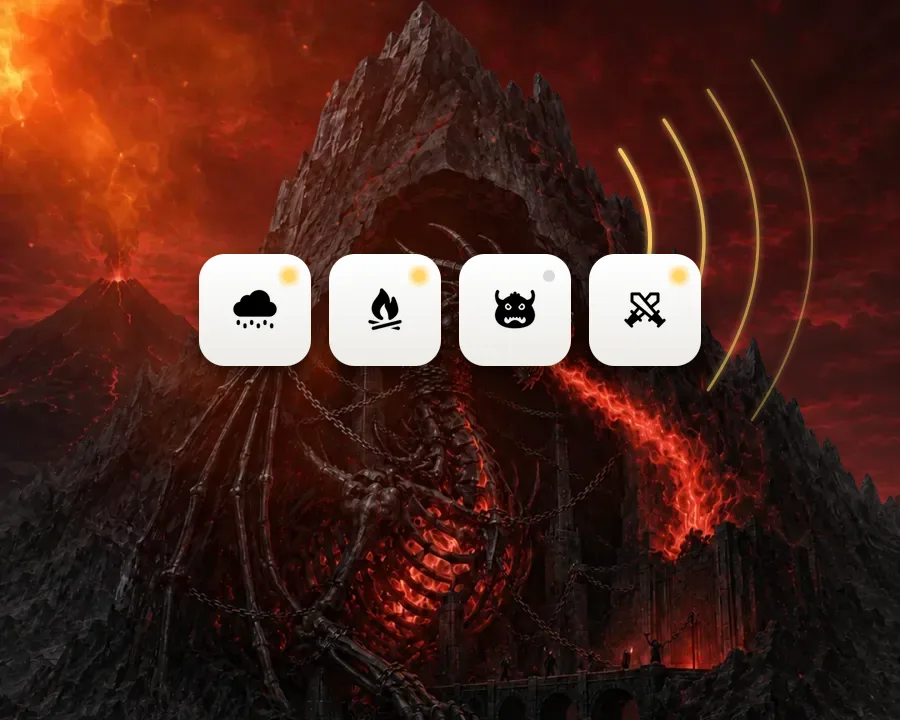
Quiet ambience tells players where they are without a word. Rain for the road, fire for the camp, wind on the mountain pass. See ambient music for D&D and try the free soundboard.
4. Pace with sentence length
Calm scenes can breathe. In danger, speak in short sentences. Ask "What do you do?" sooner. Before a reveal, stop everything, sound included, for two seconds.
5. Props, sparingly
A handwritten letter, a map with coffee stains, a real key. One prop per session is memorable; ten is a craft project.
6. Let players add detail
Ask: "What does your character notice first?" or "How does this place remind you of home?" Shared details make the world feel real to everyone.
7. Consistency
Recurring sounds, names and landmarks build a sense of place over a campaign. The same tavern should always have the same fire crackling.
Rollune's theme packs take this further, changing dice, screens and sounds together so the whole app matches the world you're playing in. See ambient sounds in Rollune.