Rollune



What is a d20?
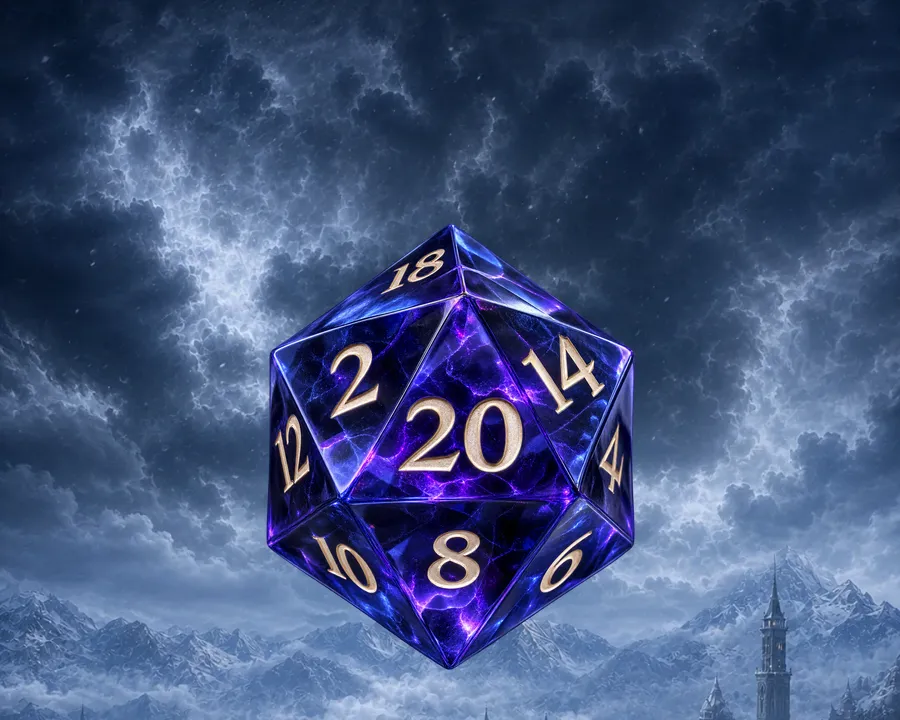
A d20 is a 20-sided die shaped like an icosahedron, numbered 1 to 20. In D&D 5e and other d20 games, almost every uncertain action is resolved with it: attack rolls, ability checks, saving throws and initiative. You roll, add a modifier, and compare the total to a target number such as an Armor Class or a Difficulty Class.
D20 odds at a glance
| Roll | Chance |
|---|---|
| Any single number (like a natural 20) | 5% |
| Natural 20 with advantage | 9.75% |
| Natural 1 with disadvantage | 9.75% |
| 10 or higher | 55% |
| 15 or higher | 30% |
| Average result | 10.5 (13.8 with advantage, 7.2 with disadvantage) |
Each +1 modifier adds 5 percentage points to your chance of hitting a fixed target, which is why a +2 from Bless-style bonuses or a better ability score matters so much. See the full math in advantage and disadvantage odds.
How to roll a d20 with a modifier
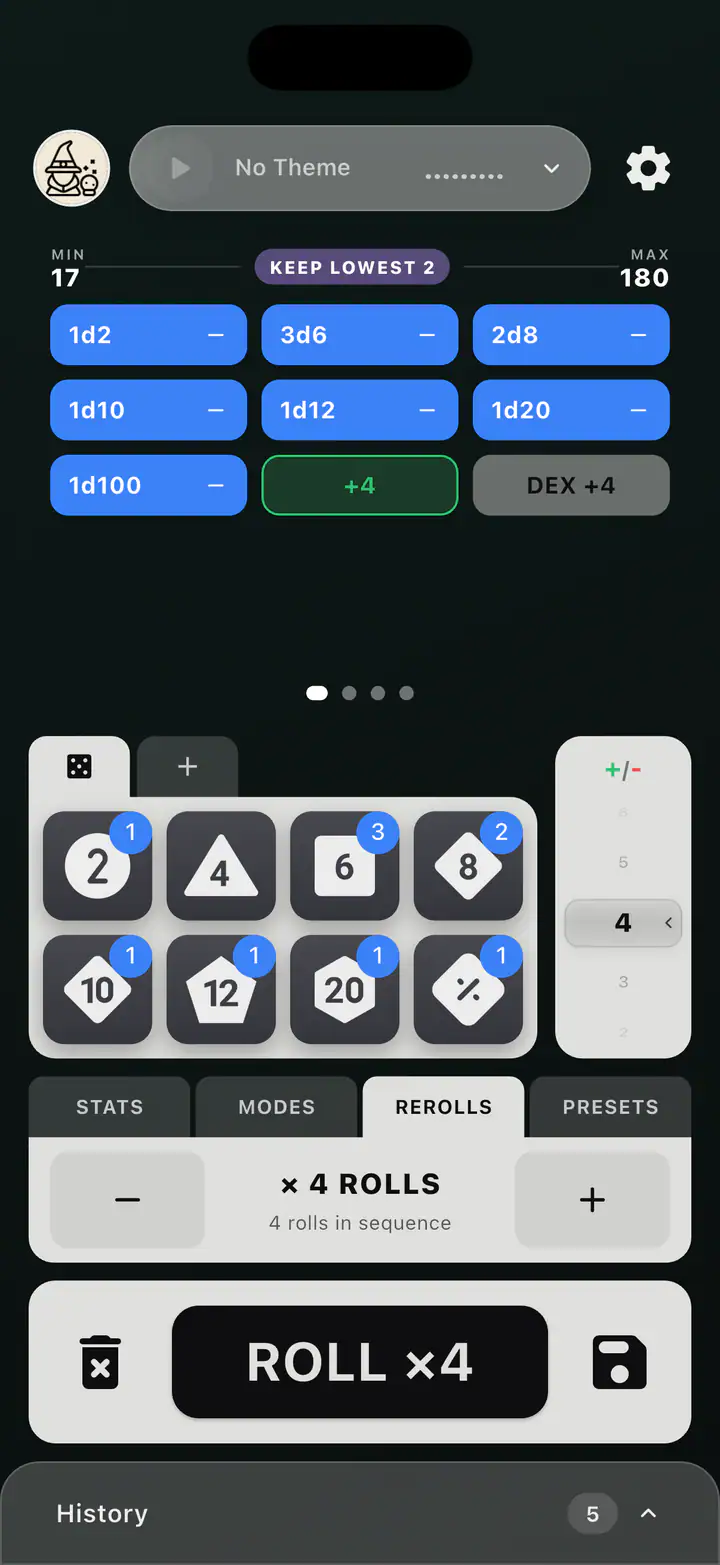
Press Roll for a plain d20, or use +/− to add your bonus first, for example +5 for a Dexterity-based attack. For advantage, open Modes and choose Advantage: the roller throws two d20s and keeps the higher one. Typing 1d20+5 or 2d20kh1+5 works too.
Natural 20s and natural 1s
In 5e, a natural 20 on an attack roll is a critical hit (roll the damage dice twice) and a natural 1 always misses. By the rules, ability checks and saving throws do not auto-succeed or fail on 20 or 1, although many tables house-rule it. The roller flags natural 20s and 1s on a single kept d20 so they are easy to spot. More in critical hits and fumbles.
Roll other dice
- Quick rollerRoll a d6Classic cube: 2d6, 8d6 and 4d6 drop lowest.
- Quick rollerRoll a d4Daggers, Magic Missile, Bless and Guidance.
- Quick rollerRoll a d8Longswords, rapiers, Cure Wounds, hit dice.
- Quick rollerRoll a d10Fire Bolt, crossbows, d10 dice pools.
- Quick rollerRoll a d12Greataxes, barbarians and random months.
- Quick rollerRoll a d100Percentile rolls, wild magic and loot tables.
- All diceFull dice rollerMix any dice with modifiers and modes.