Rollune


First character ever? Follow our step-by-step guide to creating a D&D character, then come back to build the sheet.
Ability scores and modifiers at a glance
| Score | 1 | 2–3 | 4–5 | 6–7 | 8–9 | 10–11 | 12–13 | 14–15 | 16–17 | 18–19 | 20–21 |
|---|---|---|---|---|---|---|---|---|---|---|---|
| Modifier | −5 | −4 | −3 | −2 | −1 | +0 | +1 | +2 | +3 | +4 | +5 |
The modifier, not the score, is what you add to most rolls. Test it with the Roll a check buttons: they roll a d20 and add the ability modifier, like an ability check in play.
Point buy costs
| Score | 8 | 9 | 10 | 11 | 12 | 13 | 14 | 15 |
|---|---|---|---|---|---|---|---|---|
| Cost | 0 | 1 | 2 | 3 | 4 | 5 | 7 | 9 |
With 27 points you can buy 15, 15, 15, 8, 8, 8 at the extreme, or a rounded spread like 15, 14, 13, 12, 10, 8, which is exactly the standard array.
From paper to the table
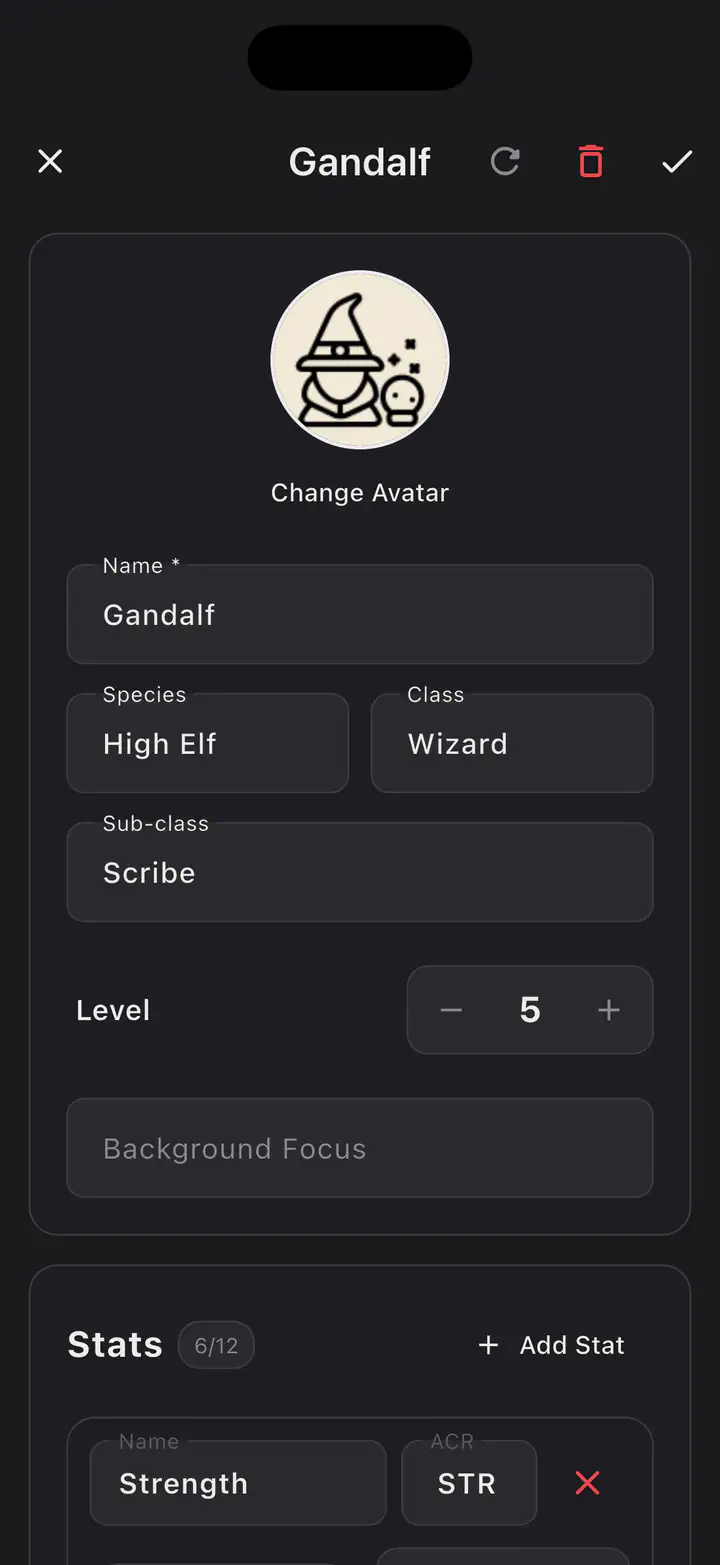
A printed sheet is perfect for a one-shot. For a campaign, Rollune's character tracker keeps the same details on your phone, levels up with you, and links each ability to the dice roller so a DEX check is a single tap. Your party, presets and history stay together, and they work offline.